





What is the dynamic performance of a double acting pneumatic actuator?
Hey there! As a supplier of double acting pneumatic actuators, I'm super stoked to chat with you about their dynamic performance. These nifty devices are all over the place in industrial applications, and understanding how they work and perform is crucial.
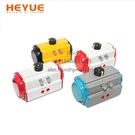
Let's start with the basics. A double acting pneumatic actuator uses compressed air to generate linear or rotary motion. Unlike a Spring Return Pneumatic Actuator, which uses a spring to return the actuator to its original position, a double acting actuator uses air pressure on both sides of the piston or vane to control movement. This means it can push and pull, which gives it more flexibility and better control in many applications.
One of the key aspects of dynamic performance is the speed of operation. Double acting pneumatic actuators can move really fast. The speed depends on a few things, like the size of the actuator, the pressure of the compressed air, and the load it's moving. In general, you can adjust the speed by controlling the air flow. By using flow control valves, you can fine - tune how quickly the actuator moves. This is super useful in applications where you need precise timing, like in automated manufacturing lines.


Another important factor is the force output. The force generated by a double acting pneumatic actuator is directly related to the air pressure and the surface area of the piston or vane. Higher air pressure means more force, but you've got to make sure your system can handle it. We offer different sizes of actuators, so you can pick the one that gives you the right amount of force for your specific job. Whether it's a small - scale operation or a heavy - duty industrial task, there's an option for you.
Accuracy is also a big deal when it comes to the dynamic performance. Double acting pneumatic actuators can be pretty accurate, especially when paired with the right control systems. You can use position sensors to monitor the position of the actuator and make adjustments as needed. This is essential in applications where precision is key, such as in the pharmaceutical or food processing industries, where even a small error can lead to quality issues.
Now, let's talk about reliability. These actuators are known for their ruggedness. They don't have a lot of moving parts, which means there's less that can go wrong. And because they use air as the power source, they're less likely to overheat compared to some electric actuators. However, you do need to keep an eye on the air quality. If the compressed air has dirt, moisture, or oil in it, it can cause problems for the actuator over time. That's why it's important to use proper air filtration systems.
In terms of types, we have Rack and Pinion Pneumatic Actuator and other variants. Rack and pinion actuators are great for converting linear motion into rotary motion. They're simple, efficient, and can be used in a wide range of applications. We also offer Stainless Steel Pneumatic Actuator, which are perfect for environments where corrosion is a concern, like in the chemical or marine industries.
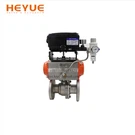
When it comes to dynamic response, double acting pneumatic actuators are pretty quick on the draw. They can start and stop moving almost instantly, which is great for applications where you need rapid changes in direction or position. And they can handle high - frequency cycling without too much wear and tear. This makes them ideal for tasks like valve control in a pipeline, where you might need to open and close the valve multiple times per minute.
But it's not all sunshine and rainbows. Double acting pneumatic actuators do have some limitations. For example, they rely on a constant supply of compressed air. If there's a problem with the air supply, like a leak or a drop in pressure, the actuator's performance can be affected. Also, they're not the best choice for applications that require extremely precise control over a very long range of motion. In those cases, you might need to look at other types of actuators.
So, if you're in the market for a double acting pneumatic actuator, there are a few things to keep in mind. First, think about your application. What kind of speed, force, and accuracy do you need? Then, consider the environment where the actuator will be used. Is it a corrosive environment? Does it need to be explosion - proof? Based on these factors, you can choose the right actuator for your needs.
We've been in the business of supplying double acting pneumatic actuators for a long time, and we've got a team of experts who can help you make the right choice. Whether you need a standard model or a custom - designed actuator, we've got you covered.
If you're interested in learning more about our double acting pneumatic actuators or want to discuss a specific project, don't hesitate to reach out. We're here to help you find the best solution for your industrial needs. Let's start a conversation and see how we can make your operations more efficient with our top - notch actuators.
References
- Pneumatic Actuator Handbook, various industry - published editions.
- Technical papers on pneumatic actuator performance from leading research institutions.