
Latest Products


Contact Us
- Room 607-2, Building 5, Wanda Plaza, No.1188, Yongding Road, Yongzhong Street, Longwan, Wenzhou, Zhejiang, China
- heyuevalveactuator@gmail.com
- +86-13486831323
Zhejiang Heyue Flowtech Co., Ltd. was established on 2012, is a professional automatic valve manufacturer. We specialize in producing Electric Motorized Wafer Butterfly Valve, Electric Motorized Triple Eccentric Butterfly Valve, Electric Motorized Sanitary Butterfly Valve, Electric Motorized PVC Butterfly Valve, Electric Motorized Flange Butterfly Valve, Electric Motorized Double Eccentric Butterfly Valve, and other Electric Butterfly Valve.
Best After-Sales Service
We boast a dedicated after-sales service team comprising five professionals, each with over three years of experience. Should you have any inquiries after receiving your shipment, feel free to reach out to us anytime.
Strict Quality Control System
With over 15 years of experience in manufacturing pneumatic actuators, electric actuators, pneumatic accessories (positioners, limit switch boxes, solenoid valves, air filter regulators, and manual overrides, etc.), pneumatic control valves, and motorized control valves, we uphold a rigorous quality control system. This ensures that every valve and actuator we produce undergoes thorough testing to meet the highest standards.
OEM & ODM Capabilities
We offer customized services, tailoring products to your specific requirements.
Wide Range of Applications
Our products find applications across various industries, including oil and gas, oil refining, petrochemical, chemical, electric power and energy, air separation, papermaking, pharmaceuticals, and more.
 Electric Motorized Flange Butterfly Valve
A. The Electric Motorized Flanged Butterfly Valve is designed to provide efficient flow control in industrial applications.. B. It features a motorized actuator that enables precise and automated
Add to Inquiry Electric Flanged Butterfly Valve
A.Double Flange Connection ends.B.Body Material: Dustile Iron, SS304, SS316C.Soft Seat: EPDM, PTFE, NBR, Silicon, Viton etc.D.Connection Standard: PN16, ANSI150LB, JIS 10K.E.Actuator Type: ON/OFF,
Add to Inquiry Electric Motorized Wafer Butterfly Valve
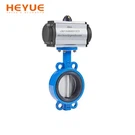
A. The Electric Motorized Wafer Butterfly Valve is designed for efficient flow control in various industrial applications.. B. It features a motorized actuator that allows for precise and automated
Add to Inquiry Electric Motorized Double Eccentric Butterfly Valve
A. The Electric Motorized Double Eccentric Butterfly Valve features a double eccentric design for improved sealing performance.. B. It is equipped with a motorized actuator that allows for precise
Add to Inquiry Electric Motorized Triple Eccentric Butterfly Valve
A. The Electric Motorized Triple Eccentric Butterfly Valve features a unique triple eccentric design.. B. It offers improved sealing performance, minimizing the risk of leakage in high-pressure
Add to Inquiry Electric Motorized PVC Butterfly Valve
A. The Electric Motorized PVC Butterfly Valve features a durable PVC construction, suitable for various applications.. B. It is equipped with a motorized actuator for automated flow control and
Add to Inquiry Electric Motorized Sanitary Butterfly Valve
A. The DIN/SMS/3A/ISO Electric Motorized Sanitary Butterfly Valve ensures hygienic fluid control in sanitary applications.. B. It conforms to industry standards, including DIN, SMS, 3A, and ISO,
Add to Inquiry
What is Electric Butterfly Valve
A Electric butterfly valve operates by changing the position of a round disc that is located within a pipeline. The disc is the size of the pipe circumference, which allows it to create a reliable seal during instances when it is necessary to restrict or stop the flow of process media. If you want to know the specifications and prices of Electric Butterfly Valve, please contact us!
Lightweight and Compact Construction
A thin metallic strip acts as a flow-control mechanism for butterfly valves. The disc connects to the actuator through a lightweight stem. As a result, the space required for housing the disc reduces. The bodies of butterfly valves are compact and occupy a smaller space than other valve types. The valves can fit in pipelines that are in confined spaces.
The cost of manufacturing valves depends on the quantity of materials required. Butterfly valves are cheap since they do not consume a lot of material. Their compact construction means that the valves do not get bulkier as the diameters of the water distribution and treatment systems increase.
Low-Pressure Drop and High-Pressure Recovery Factor
Water distribution systems require continuous pumping to bridge consumer demands. When a pressure drop exists in the system, the energy requirement for pumps spikes. Valves induce pressure drops across pipe sections and can strain pumps. The disc of the butterfly valve is always present in the flow. However, its lightweight construction ensures that the pressure drop across the valve is minimal. The disc has a high-pressure recovery factor and responds fast to changes in pipe pressure conditions.
The ability of butterfly valves to maintain low-pressure drops ensures that the energy consumption for pumping water across the complex municipal water systems is low. That way, the cost of operating the pipelines is low.
Ease of Operation and Actuation
Using a thin metallic strip as the flow regulation mechanism simplifies the operation and actuation of butterfly valves. The disc requires small amounts of force to combat the frictional resistance of the service fluid. The torque required to initiate the quarter-turn of the valve is equally low.
Low Maintenance Requirements
Butterfly valves have few internal components, and simple constructions ensure that few parts interfere, resulting in fewer breakdowns. The valves do not have pockets that trap debris and dirt in water and wastewater.
With fewer breakdowns and maintenance interventions, the valves can operate through several cycles, a desirable quality for large-scale water distribution and wastewater collection.
Quick and Efficient Sealing
Butterfly valves respond quickly to control signals. They seal efficiently against the service media. Municipal water distribution applications require the highest levels of precision to guarantee the purity and potability of water. In wastewater collection and treatment systems, the valves prevent leakages that may affect the quality of processes.

Type of Electric Butterfly Valve
Wafer Butterfly Valve
The Wafer Butterfly Valve is sandwiched between two flanges, and none of the bolts on the flange will thread into the valve body itself. Wafer butterfly valves provide a low-cost solution for isolation.
A wafer-style valve can be a zero, single, double, or triple offset butterfly valve. Among these options, the zero offset valve is the most commonly used and the least expensive. These valves are typically resilient seated, but the double and triple offset valves can be metal seated valves.
Most resilient seated valves can have replaceable seats, but some do not, so make sure you are aware of what type you're getting as there are benefits to both.
Lug Butterfly Valve
The lug butterfly valve has lugs on the body of the valve, allowing for direct mounting to the pipe without the use of flanges. The counter flange bolts will thread right into the lug-style butterfly valve. Lug butterfly valves provide a low-cost solution for isolation.
A lug-style valve can be a zero, single, double or triple offset butterfly valve, with the zero offset valve being the most commonly used and least expensive. These valves are typically resilient seated, but the double and triple offset valves can be metal seated valves.
Double Flange Butterfly Valve
The double flange butterfly valve has two flanges on the body of the valve, providing increased stability and security in high-pressure applications.
A flanged-style valve can be a zero, single, double, or triple offset butterfly valve. The zero and single offset are the most commonly used and least expensive.
Industrial Style High Performance Butterfly Valve
This type of butterfly valve is designed for demanding applications and offers superior flow control. High-performance butterfly valves often have a metal-to-metal seat design and are often used in applications where a tight shutoff is required, such as power plants or pipelines carrying hazardous materials.
One advantage of using this type of butterfly valve is that its seat will outlast a standard resilient seated butterfly valve. Additionally, low torques make these valves easy to operate and extend the life of the actuator.
Notably, tight shut-off is the main reason why users choose an industrial style high-performance butterfly valve. Typically, these valves are made of either carbon steel or stainless steel, which improves their shut-off capabilities.
Waterworks Double Eccentric Butterfly Valve
The double eccentric butterfly valve is designed with an offset shaft and disc, providing improved sealing and reduced torque compared to other types of butterfly valves. This type of butterfly valve is often used in applications where a tight shutoff is required and low torque is necessary, such as water pipelines.
The double offset butterfly valve does not have issues with compression or seat set on the resilient seat. It has a double overlay weld on the body seat and typically comes with a non-wetted disc hub, among other features.
Triple Offset Butterfly Valves
Triple offset butterfly valves feature three offsets: an offset between the disc and the stem, an offset between the disc and the seat, and an offset in the sealing surface of the seat.
They are designed to eliminate rubbing between the seat and seal ring through the flow path, which reduces seat and seal wear and extends the valve's cycle life. The seat of the valve also has a right-angled cone shape due to its offset conical form, which ensures smooth operation throughout the entire cycle.

Electric Actuator
A valve actuator is the mechanism for opening and closing a valve. Manually operated valves require someone in attendance to adjust them using a direct or geared mechanism attached to the valve stem.
Valve Body
Made from a tough and rigid material, the valve body houses and protects the disc and other internal components of the butterfly valve. It links the valve to the piping system and to the external operating mechanism that controls the disc.
Disc
The disc permits, regulates, and stops the flow of the fluid in the pipeline. Flow is controlled by the rotary motion of the disc. The discharge flow rate depends on the degree of disc opening.
When the disc is perpendicular to the flow's cross-sectional area, the fluid is fully obstructed from flowing out of the valve. Otherwise, the fluid is permitted to flow through the space between the seat and the disc. It takes a 90° rotation from the closed position of the disc to allow full opening or closing of the valve. Flow is throttled when the disc is rotated less than 90°.
Stem
The stem is a shaft that connects the disc to the external operating mechanism. It is sealed by O-rings and bushings to prevent fluid leakage. The stem can be made from a one-piece shaft or two-piece (split-stem) shaft. The placement of the stem axis and its connection to the disc depends on the type of butterfly valve.
Seat or Sealing Ring
The valve seat for basic concentric butterfly valves is a ring that provides sealing between the disc edge and the valve body when it is in a closed position. Its sealing action is necessary to avoid leakage of any fluid to the discharge of the butterfly valve. Since the disc slides on the surface of the seat during valve opening, it must be made from a material with a low coefficient of friction.
The butterfly valve seat can be made a soft seat or a metal seat. The material of the seat limits the temperature and pressure rating of the butterfly valve. Soft seats, which are made from plastic and elastomeric materials, are limited to lower temperature applications because they deform at elevated temperatures. Metal sealing rings are capable of performing at higher temperatures and have a longer seal ring life but are difficult to completely seal.
Operating Mechanism
The external operating mechanism of a butterfly valve controls the fluid flow across the valve. It may be operated by manual rotation of the stem or by automatic actuation.
Manual operation of butterfly valves involves the application of torque to the lever or handwheel attached to the stem. Levers can set the valve into a closed, fully-opened, or partially-opened position. Larger butterfly valves are equipped with handwheels and gearboxes to increase torque and to aid in the opening and closing of the valve.
Automatic actuation may be used to control the butterfly valve situated in harsh environments and remote locations. It makes the opening and closing of butterfly valves faster, especially for larger valves requiring larger amounts of torque. The types of actuations used in butterfly valves to turn the valve stem are electromechanical actuation, (which uses an electric-powered motor), pneumatic actuation (which moves a piston or a diaphragm with compressed air), and hydraulic actuation, (which moves a piston or a diaphragm with hydraulic pressure).
Triple Offset
Tripled offset has three eccentrics each of which is located differently in the valve. The eccentrics are placed in an offset position to form an offset conical profile creating a right angle cone.
Bushing or Bearing
The quality and type of bushing determines the longevity of a butterfly valve. The best bushings are resistant to corrosion and wear and used for precision control, current limiting, and switching of chemicals, petrochemicals, chlorine, paper production, and electroplating. Bushings are made from a variety of materials with many types being self lubricating for enhanced performance of the butterfly valve.
Storage Method of Electric Butterfly Valve:
This product should be stored in a dry and well-ventilated room. It should not be stored outdoors. The sealing ring should not be in contact with oily substances so that aging can be avoided.
Storage and transportation: lids are used at both ends of the diameter to prevent dust and rust and to keep the channels clean. At both ends of the processing surface, dirt should be removed and rust inhibitors should be coated.
For an electric butterfly valve whose storage period is over 18 months, before installation and use, we should re-test it to ensure the integrity of the structure and function.
When placing an electric butterfly valve, make sure the electric device doesn't get crushed and the terminals don't get damaged, and avoid contact with corrosive substances. Be careful when handling to avoid damage to electrical and mechanical parts.
Certifications

Frequently Asked Questions
Q: What is the alternative to the electric butterfly valve?
Q: What is the use of electric butterfly valve?
Q: What is the purpose of a electric butterfly valve?
Q: Are electric butterfly valves good for high pressure?
Q: Which is better gate valve or electric butterfly valve?
Q: Which is better electric butterfly valve or electric ball valve?
Q: What is the maximum pressure for a electric butterfly valve?
Q: What is the life of electric butterfly valves?
Q: Are electric butterfly valves expensive?
Q: Are electric butterfly valves reliable?
Q: Can electric butterfly valves be used for air?
Q: Can you rebuild a electric butterfly valve?
Q: Can you use electric butterfly valves on steam?
Q: Can you hot tap a electric butterfly valve?
We're well-known as one of the leading electric butterfly valve manufacturers and suppliers in China. If you're going to high quality electric butterfly valve made in China, welcome to get more information from our factory. Good service and punctual delivery are available.
Electric Motorized PVC Butterfly Valve, Electric Motorized Triple Eccentric Butterfly Valve, Electric Motorized Double Eccentric Butterfly Valve