
Latest Products


Contact Us
- Room 607-2, Building 5, Wanda Plaza, No.1188, Yongding Road, Yongzhong Street, Longwan, Wenzhou, Zhejiang, China
- heyuevalveactuator@gmail.com
- +86-13486831323
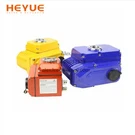
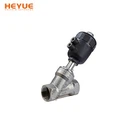
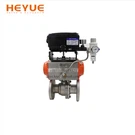
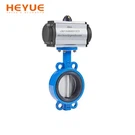
Zhejiang Heyue Flowtech Co., Ltd. was established on 2012, is a professional automatic valve manufacturer. We specialize in producing Electric Motorized 3-Way Ball Valve, Wafer Thin Electric Ltaly Type Ball Valve, Electric Motorized V-Port Ball Valve, Electric Motorized Sanitary Ball Valve, Electric Motorized PVC Ball Valve, Electric Motorized 3-PC Ball Valve, and other Electric Ball Valve.
Best After-Sales Service
We boast a dedicated after-sales service team comprising five professionals, each with over three years of experience. Should you have any inquiries after receiving your shipment, feel free to reach out to us anytime.
Strict Quality Control System
With over 15 years of experience in manufacturing pneumatic actuators, electric actuators, pneumatic accessories (positioners, limit switch boxes, solenoid valves, air filter regulators, and manual overrides, etc.), pneumatic control valves, and motorized control valves, we uphold a rigorous quality control system. This ensures that every valve and actuator we produce undergoes thorough testing to meet the highest standards.
OEM & ODM Capabilities
We offer customized services, tailoring products to your specific requirements.
Wide Range of Applications
Our products find applications across various industries, including oil and gas, oil refining, petrochemical, chemical, electric power and energy, air separation, papermaking, pharmaceuticals, and more.
 Electric Motorized 2-PC Flange Ball Valve
A. The electrical motorized 2-PC flanged ball valve combines the benefits of motorized operation with reliable flow control. . B. It offers precise positioning and automation capabilities, making it
Add to Inquiry Electric Motorized 3-PC Ball Valve
A. The electrical motorized 3PC ball valve combines the benefits of motorized operation with reliable flow control. . B. It offers convenient remote control for precise positioning and automation. .
Add to Inquiry Electric Motorized 3-Way Ball Valve
A. The electric motorized 3-way ball valve combines advanced motorized operation with versatile flow control. . B. With its three-port design, it enables seamless switching between different flow
Add to Inquiry Electric Motorized Italian Wafer Thin Ball Valve
A.The electric motorized Italian wafer thin ball valve offers advanced motorized operation for precise flow control. . B.Its thin design makes it suitable for applications with limited space, without
Add to Inquiry Electric Motorized V-Port Ball Valve
A. The electric motorized segmented V-port ball valve offers precise flow control with its unique V-shaped port design. . B. The valve's motorized operation allows for automated control and accurate
Add to Inquiry Electric PVC Ball Valve
A. Corrosion-Resistant PVC Material Ball Valve. B. Bidirectional Flow (Three-way Flow is available). C. Multiple Connections: Union, Flange.. D. Multiple Voltages: 12V,24V,220V and 380etc.
Add to Inquiry Electric Ball Valve for sanitary application
A. Hygienic Design & Materials.. B. Reliable Electric Actuation . C. CIP (Clean-in-Place) and SIP (Sterilize-in-Place) Compatible. D. 2-Way and 3-Way Connection Ends.
Add to Inquiry
What is Electric Ball Valve
An electric ball valve is an automatic form of quarter-turn valve that uses gear trains and motors to control flow. The gear train and motor system will open the valve when the ball's hole is in line with fluid flow. It will also automatically close when pivoted at 90 degrees by the handle of the valve. If you want to know the specifications and prices of Electric Ball Valve, please contact us!
Precision Control and Automation
Motor-operated valves excel in precision control, a quality often lacking in manually operated counterparts susceptible to human error and operational inconsistencies. In contrast, motor-operated valves can be programmed and operated with a high degree of accuracy, ensuring consistency and reproducibility. This level of precision is particularly vital in industries that hinge on precise flow rates, pressure thresholds, and fluid ratios to uphold product quality and safety standards.
Moreover, the automation facet of MOVs significantly curtails the need for direct human intervention. This results in enhanced operational efficiency, reduced labor expenses, and even the potential to sustain uninterrupted processes around the clock without continuous human oversight.
Remote Operation and Monitoring
Motor-operated valves can be equipped with sophisticated control systems that facilitate remote operation and monitoring. This feature proves invaluable when valves are situated in hazardous or inaccessible locations. Operators can command and observe valve statuses from a safe distance, mitigating exposure to potentially perilous environments. Real-time monitoring expedites the detection of anomalies or irregularities, enabling prompt responses and preventive maintenance actions, thereby elevating system reliability.
Rapid Response Times
In the dynamic landscape of industrial processes, rapid response times are of the essence. Motor-operated valves surpass their manually-operated counterparts in this regard. The automated nature of MOVs enables them to open or close with precision and swiftness, reacting to evolving process conditions in mere milliseconds. This attribute becomes particularly advantageous in emergent scenarios, where swift valve actions can forestall potential mishaps, curtail damages, and ensure the safety of personnel and equipment alike.
Precise Positioning
Motor-operated valves are equipped with advanced position control systems that enable accurate and repeatable valve positioning. This precision is especially critical in applications requiring meticulous modulation of flow rates or pressure levels. The ability to finely control the valve's position ensures seamless and consistent processes, preempting concerns like overflows, pressure surges, and deviations in product quality.
Minimized Wear And Tear
Manually operated valves often endure wear and tear due to the repetitive physical force required for their operation. This susceptibility can lead to valve deterioration over time, resulting in leaks, malfunctions, and escalated maintenance needs. In contrast, motor-operated valves operate sans the necessity for physical force, reducing wear and tear. This not only prolongs the valve's lifespan but also diminishes the frequency of maintenance tasks, yielding lower overall operational expenditures.
Augmented Safety Measures
Safety remains a paramount consideration in industrial environments. Motor-operated valves bolster safety protocols by diminishing the necessity for operators to be physically proximate to hazardous substances or precarious surroundings. Through remote operation capabilities, operators can manage valve functions without jeopardizing their safety. Moreover, the rapid responsiveness of MOVs in emergencies curbs the risk of accidents and containment breaches, effectively safeguarding both personnel and the environment.
Integration With Control Systems
Contemporary industrial processes heavily lean on intricate control systems for seamless operations. Motor-operated valves seamlessly integrate into these control systems, facilitating efficient communication and coordination with other equipment and processes. This integration fosters comprehensive process automation and optimization, ensuring harmonious collaboration among all components to attain desired outcomes.
Type of Electric Ball Valve
3-PC Ball Valve
Three-piece ball valves are manufactured with one main body and two pipe connectors. The pipe connectors are typically threaded or welded to a pipe. This enables the main body to be easily removed for cleaning or repairs without having to remove the pipe connectors.
2-PC Flange Ball Valve
Two-piece ball valves feature a main body with a single threaded end connection and a lever. They are also available with a bolt and flange connection assembly, as well as with larger port sizes.
V Port Ball Valve
A V-Port Ball Valve has either a 'v' shaped ball or a 'v' shaped seat, which allows the orifice to be opened and closed in a more controlled manner with a closer to linear flow characteristic.
PVC Ball Valve
A PVC or polyvinyl chloride ball valve is a plastic on and off valve that has a rotary ball with a bore where turning the ball a quarter turn can stop the flow of a fluid. They are highly durable, cost effective and can be used to control the flow of water, air, corrosive chemicals, acids, and bases.

Application of Electric Ball Valves
HVAC Systems
Electric ball valves play a crucial role in heating, ventilation, and air conditioning systems. They control the flow of hot or cold water, glycol, or other heat transfer fluids, regulating the temperature in buildings. These valves are essential for zone control, ensuring that different areas receive the right amount of heating or cooling.
Industrial Processes
In industrial settings, Electric ball valves are used for process control. They can handle a variety of fluids, including water, chemicals, and gases. Industries such as manufacturing, chemical processing, and food production rely on electric ball valves to control their processes precisely.
Water Treatment
Water treatment facilities use electric ball valves to manage the flow of water, chemicals, and additives. These valves ensure that water is treated, filtered, and distributed properly, meeting the required quality standards.
Irrigation Systems
In agriculture and landscaping, electric ball valves are used in automated irrigation systems. They control water flow to different zones, helping conserve water and ensure that plants receive the right amount of hydration.
Swimming Pools and Spas
Electric ball valves regulate water flow in swimming pool and spa systems. They are used to direct water to different features like fountains, jets, and waterfalls, enhancing the recreational experience.
Plumbing Systems
In residential and commercial plumbing, electric ball valves can control water flow in individual fixtures, such as faucets and showers. They are also used for whole-house shutoff valves to control water supply to a building.
Fire Protection Systems
Fire protection systems often use electric ball valves to control the flow of water or fire-suppressing agents. These valves play a critical role in fire sprinkler systems, ensuring water is delivered to the appropriate areas during a fire emergency.
Oil and Gas Industry
Electric ball valves are used to control the flow of oil, natural gas, and other hydrocarbons in pipelines and processing facilities. They provide reliable shutoff and control in demanding and hazardous environments.
Marine Applications
In marine systems, electric ball valves control water and fluid flow for various purposes, such as ballast systems, bilge pumps, and engine cooling.
Brewing and Beverage Industry
Breweries and beverage production facilities use electric ball valves to control the flow of liquids during the brewing and bottling processes, ensuring precise measurements and consistent product quality.
Chemical Industry
Electric ball valves are used for precise control in the chemical industry, handling a wide range of corrosive and hazardous substances.

Valve Body/Valve Housing
The valve body or valve housing in a motorized ball valve is the component used to contain all internal parts of the valve. The valve body is made of strong, hard, and rigid materials so that it can have high strength enough to withstand high pressure and high temperatures associated with the fluid flow. The inlet and outlet ports of a motorized ball valve are also made on the valve body.
Rotary Ball
The ball is a spherical component with a hole in its middle. The hole at the center of the ball is known as a bore. The hole or bore in the ball serves as the opening to the fluid flow. The ball in a motorized ball valve can be a hollow ball or solid ball. For a solid ball, there is a constant opening diameter which enhances smooth fluid flow at constant velocity. For a hollow ball, the space inside it enhances more fluid to flow through the valve. However, hollow balls in a motorized ball valve tend to have more turbulence as well as high velocities. Nevertheless, a hollow ball in a motorized ball valve makes the valve light in weight and cheap relative to a solid ball.
Stem (Shaft)
This is the component of a motorized ball valve that connects the electric motor to the ball. The stem is a shaft that transmits power from the electric motor to operate the motorized ball valve. The stem in a motorized ball valve is designed with seals like O-rings and packing rings for sealing the bonnet as well as the stem/shaft to prevent fluid leakage.
Bonnet
Bonnet in a motorized ball valve is the component placed on top of the valve body to cover internal parts. The bonnet and the valve body in a motorized ball valve are connected using screws or bolts and nuts or by welding to ensure it is leakage free. Just like the valve body, the bonnet should be made of strong, hard, and rigid materials that can withstand high pressure and high temperatures according to the intended use of that valve.
Seat
The seat in a motorized ball valve is a component used to provide a seal between the valve body and the ball. There is an upstream seat adjacent to the valve inlet side and a downstream seat placed opposite to the upstream seat adjacent to the valve discharge side.
Actuator
The actuator is the component is a motorized ball valve that is used to provide the power to operate the valve. The actuator is an electric motor. The actuator can be automatic or semi-automatic.
Packing
Packing refers to the seal around the valve stem/shaft used to prevent fluid leakage.
How to Install Electric Ball Valve
●Ball valves can be installed in any direction. However in bigger sizes to reduce load on the valve caused by the actuator or gearbox trying to pull away it may be necessary to install with the drive shaft vertical. Electric actuators usually require vertical installation.
●Verify the material of the ball valve body, seat and ball before installation. Ensure that there are no defects caused by storage or transportation.
●Verify the pressure rating of the valve vs the application requirement.
●Verify the temperature rating of the valve vs the application requirement.
●Verify the valve thread (BSP, NPT, socket weld ANSI), flange (ANSI 150, ANSI 300 etc) or solvent weld (BLP schedule 40) vs the application requirement.
●Complete all welding works before valve installation and be sure the flange has cooled to ambient temperature before installing the ball valve.
●Make sure there is no welding residue, waste, rust or other debris in the pipe before installation. Wash with water or a mild detergent if needed.
●Clean the surface of the flange or pipe thread that will come in contact with the ball valve to ensure it is free of rust and debris. Wash with water or a mild detergent if needed.
●Make sure there is no warpage of the flange or misalignment of the ball valve in relation to the flange.
●Support the valve where necessary to reduce load on the piping (important on bigger valve and actuator assemblies).
●For 2 way and 3way threaded valves (BVS, BVF8, BLS3) it will be necessary in metal pipework to allow for removal of the valve for maintenance by having a pipe union installed.
●3 piece threaded and 2 piece flanged ball valves can be removed for maintenance without disturbing the pipework.
●Tighten the bolts on a flanged valve one at a time doing it in stages so even pressure is applied and a seal is formed between the valve and flanges.
●Once the installation is complete, operate the valve several times to ensure it is free from impingement and rotating through its full 90 degree operation.
Certifications

Frequently Asked Questions
Q: How do Electric ball valves work?
Q: What is a electric ball valve used for?
Q: Why are electric ball valves good?
Q: Are electric ball valves the best?
Q: What connects to a ball valve?
Q: Can ball valves fail?
Q: How does a ball valve open?
Q: What are ball valves made of?
Q: Is electric ball valve a control valve?
Q: Can we use electric ball valve to control flow?
Q: Are electric ball valves flow directional?
Q: Are electric ball valves manual or automatic?
Q: Why do electric ball valves leak?
Q: Should electric ball valve be fully open?
Q: Can an electric ball valve break?
We're well-known as one of the leading electric ball valve manufacturers and suppliers in China. If you're going to high quality electric ball valve made in China, welcome to get more information from our factory. Good service and punctual delivery are available.
Electric Motorized Sanitary Ball Valve, Electric Motorized 3 PC Ball Valve, Wafer Thin Electric Ltaly Type Ball Valve