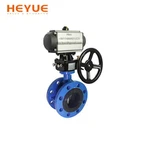
Common Fault Detection And Repair Of hEYUE Electric Actuators
Effective fault detection and repair are crucial for maintaining the reliability and longevity of electric actuators in automated process systems. A structured approach to troubleshooting, moving from simple checks to complex diagnostics, ensures quick resolution and minimizes downtime.
The initial step involves verifying basic operational conditions. This includes checking the main power supply for correct voltage and stability, as well as ensuring the integrity of the control signal (e.g., 4-20mA for modulating types). Loose connections, blown fuses, or a faulty power supply are common culprits for a completely non-responsive actuator.
Many operational issues manifest as the actuator failing to move or stopping mid-stroke. Key areas to investigate are:
Motor and Thermal Protection: The motor may be seized due to wear or overheating. Most actuators have an internal thermal cut-out that disengages the motor to prevent burnout. Allowing the unit to cool down is often the first remedy.
Torque and Limit Switches: If the actuator trips on torque overload, it indicates an obstruction or a valve that is too tight. Mechanically decoupling the actuator from the valve and testing its operation can isolate the problem. Incorrectly set limit switches can also prevent the actuator from reaching its full open or closed position.
Control Module and Feedback: A faulty control module or position feedback potentiometer can cause erratic behavior, such as the actuator hunting for a position or not responding accurately to the control signal. Using a multimeter to check the potentiometer's resistance can confirm its health.
For repairs, always isolate power before any disassembly. Common corrective actions include cleaning internal components, replacing damaged gears, recalibrating limit and torque switches, and swapping out defective control boards or feedback sensors. A systematic approach to detection, followed by careful, documented repair, is key to efficient maintenance.