


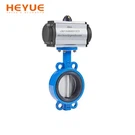



Hey there! As a supplier of Pneumatic Lug Butterfly Valves, I'm stoked to break down how these nifty devices work. Let's dive right in!


The Basics of a Pneumatic Lug Butterfly Valve
First off, you might be wondering what a pneumatic lug butterfly valve actually is. Well, it's a type of valve that uses air pressure to control the flow of fluid through a pipeline. The "lug" part means it has lugs on the outside of the valve body, which allow it to be bolted between two flanges in a pipeline. And the "butterfly" in the name comes from the disc inside the valve, which looks like a butterfly's wing.
The Key Components
Let's take a look at the main components of a pneumatic lug butterfly valve.
- Valve Body: This is the outer shell of the valve. It's usually made of sturdy materials like cast iron, stainless steel, or aluminum, depending on the application. The body houses all the other components and provides a connection point to the pipeline.
- Disc: The disc is the heart of the butterfly valve. It's a circular plate that rotates within the valve body to control the flow of fluid. When the disc is parallel to the flow, the valve is fully open, and when it's perpendicular, the valve is fully closed.
- Stem: The stem is a rod that connects the disc to the actuator. It transfers the rotational motion from the actuator to the disc, allowing it to open and close.
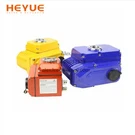
- Actuator: The actuator is what makes the valve move. In a pneumatic lug butterfly valve, the actuator is powered by compressed air. When air is supplied to the actuator, it creates a force that rotates the stem, which in turn rotates the disc.
- Seals: Seals are used to prevent leakage between the disc and the valve body. They're typically made of elastomers like rubber or silicone, which provide a tight seal even under high pressure.
How It Works
Now that we know the components, let's see how a pneumatic lug butterfly valve actually works.
Opening the Valve
When you want to open the valve, compressed air is supplied to the actuator. The air pressure creates a force that pushes a piston or a diaphragm inside the actuator. This force causes the actuator to rotate the stem in a counterclockwise direction (when viewed from the top). As the stem rotates, it turns the disc, which moves from a perpendicular position to a parallel position with respect to the flow of fluid in the pipeline. When the disc is parallel to the flow, the valve is fully open, and fluid can flow freely through the pipeline.
Closing the Valve
To close the valve, the compressed air supply to the actuator is reversed. The air pressure now pushes the piston or diaphragm in the opposite direction, causing the actuator to rotate the stem in a clockwise direction. As the stem rotates, the disc moves from a parallel position to a perpendicular position with respect to the flow of fluid. When the disc is perpendicular to the flow, the valve is fully closed, and fluid cannot flow through the pipeline.
Flow Control
In addition to fully opening and closing the valve, a pneumatic lug butterfly valve can also be used for flow control. By adjusting the amount of air pressure supplied to the actuator, you can position the disc at any angle between fully open and fully closed. This allows you to regulate the flow rate of fluid through the pipeline.
Applications
Pneumatic lug butterfly valves are used in a wide variety of applications across different industries. Here are some common examples:
- Water Treatment: In water treatment plants, these valves are used to control the flow of water and chemicals in the treatment process. They can be used to regulate the flow of water into and out of tanks, as well as to control the dosage of chemicals.
- HVAC Systems: In heating, ventilation, and air conditioning (HVAC) systems, pneumatic lug butterfly valves are used to control the flow of air and water. They can be used to regulate the temperature and humidity of a building by controlling the flow of hot or cold water through the radiators or air handlers.
- Food and Beverage Industry: In the food and beverage industry, these valves are used to control the flow of liquids and gases during the production process. They can be used to control the flow of ingredients into a mixing tank, as well as to regulate the flow of finished products out of a bottling or canning line.
- Chemical Industry: In the chemical industry, pneumatic lug butterfly valves are used to control the flow of chemicals in pipelines. They can be used to regulate the flow of corrosive or hazardous chemicals, as well as to control the pressure and temperature of the chemicals.
Why Choose Our Pneumatic Lug Butterfly Valves
As a supplier of pneumatic lug butterfly valves, we take pride in offering high-quality products that are reliable and easy to use. Here are some reasons why you should choose our valves:
- Quality Materials: We use only the best materials in the manufacturing of our valves. Our valve bodies are made of high-grade cast iron or stainless steel, which provides excellent durability and corrosion resistance. Our discs are made of precision-machined materials, which ensures a tight seal and smooth operation.
- Advanced Design: Our valves are designed with the latest technology to ensure optimal performance. We use advanced computer-aided design (CAD) software to design our valves, which allows us to optimize the shape and size of the components for maximum efficiency.
- Customization Options: We understand that every application is unique, which is why we offer a wide range of customization options for our valves. We can customize the size, material, and configuration of our valves to meet your specific requirements.
- Excellent Customer Service: We are committed to providing our customers with the best possible service. Our team of experienced engineers and technicians is available to answer your questions and provide you with technical support. We also offer fast delivery and competitive pricing.
If you're interested in our Pneumatic Lug Butterfly Valve, Pneumatic High Performance Double Eccentric Butterfly Valve, or Pneumatic Flange Butterfly Valve, don't hesitate to reach out to us for a quote or to discuss your specific needs. We're here to help you find the perfect valve solution for your application.
References
- "Valve Handbook", by Crane Co.
- "Industrial Valves: Selection and Sizing", by Cameron Iron Works, Inc.