





In the realm of industrial fluid control systems, the pneumatic sanitary ball valve stands as a crucial component. As a trusted supplier of Pneumatic Sanitary Ball Valves, I am often asked about the response time of these valves. Understanding the response time is essential for ensuring the efficiency, reliability, and safety of various processes. In this blog, we will delve into the concept of response time for pneumatic sanitary ball valves, explore the factors that influence it, and discuss its significance in different applications.
What is Response Time?
The response time of a pneumatic sanitary ball valve refers to the time it takes for the valve to move from one position (fully open or fully closed) to the other in response to a control signal. It is a critical parameter that determines how quickly the valve can adjust the flow of fluids through a pipeline. In practical terms, it is the period elapsed from the moment the actuator receives a signal to initiate a change in valve position until the valve reaches its new, fully open or fully closed state.
There are two main types of response times that are commonly considered:
- Opening Response Time: This is the time taken for the valve to move from the closed position to the fully open position. It is important in applications where a sudden influx of fluid is required, such as in emergency situations or when starting a process.
- Closing Response Time: Conversely, the closing response time is the time it takes for the valve to transition from the fully open position to the closed position. This is crucial in preventing spills, leaks, or over - filling in a system.
Factors Influencing the Response Time
Several factors can affect the response time of a pneumatic sanitary ball valve. Understanding these factors can help in optimizing the valve's performance and selecting the right valve for specific applications.
1. Actuator Design and Size
The actuator is the component responsible for moving the ball valve. The type of actuator used, such as a single - acting or double - acting actuator, can have a significant impact on the response time. Double - acting actuators, which use compressed air to both open and close the valve, generally offer faster response times compared to single - acting actuators, which rely on a spring to return the valve to its default position.
The size of the actuator also matters. A larger actuator can generate more torque, which allows the valve to move more quickly. However, larger actuators may also require more air volume and a longer time to fill or exhaust, which can offset the advantage of increased torque.
2. Air Supply Pressure
The pressure of the compressed air supply is directly related to the force generated by the actuator. Higher air supply pressures can result in faster valve opening and closing times. However, there are practical limits to the pressure that can be used, as excessive pressure can cause damage to the valve components or the actuator.
3. Valve Size and Type
The size of the valve is an important factor. Larger valves have more mass and require more force to move the ball from one position to another. As a result, larger valves generally have slower response times compared to smaller valves.
The type of ball valve, such as a full - port or reduced - port valve, can also affect the response time. Full - port valves have a larger bore, which allows for a higher flow rate but may require more torque to operate. Reduced - port valves, on the other hand, have a smaller bore and may be easier to actuate, resulting in faster response times.
4. Pipeline Conditions
The conditions within the pipeline, such as fluid viscosity, pressure, and flow rate, can influence the response time of the valve. High - viscosity fluids can create more resistance to the movement of the ball, slowing down the valve's operation. Similarly, high pipeline pressures can increase the force required to open or close the valve, leading to longer response times.
Significance of Response Time in Different Applications
The response time of a pneumatic sanitary ball valve is of utmost importance in various industries and applications.
1. Food and Beverage Industry
In the food and beverage industry, where hygiene and product quality are paramount, quick response times are essential. Pneumatic sanitary ball valves are used to control the flow of liquids such as milk, juices, and wine. A fast - acting valve can prevent product contamination by quickly shutting off the flow in case of an emergency or a malfunction. For example, if there is a sudden drop in pressure or a blockage in the pipeline, a valve with a short response time can rapidly close to prevent the backflow of contaminated fluids.
2. Pharmaceutical Industry
In pharmaceutical manufacturing, precision and accuracy are crucial. Pneumatic sanitary ball valves are used in processes such as ingredient dosing, sterilization, and filtration. A valve with a consistent and fast response time ensures that the right amount of raw materials is added at the right time, maintaining the integrity of the production process. Moreover, in aseptic environments, rapid valve actuation helps to minimize the risk of microbial contamination.
3. Chemical Processing
In chemical processing plants, pneumatic sanitary ball valves are used to control the flow of hazardous chemicals. A short response time is essential for preventing leaks, spills, and chemical accidents. For instance, in the event of a sudden increase in pressure or a fault in the system, a valve that can quickly close can prevent the release of toxic chemicals into the environment.
Our Product Range
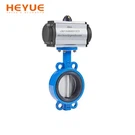
We offer a wide range of pneumatic sanitary ball valves designed to meet the diverse needs of different industries. Our Pneumatic Italian Wafer Thin Ball Valve is a compact and lightweight option that provides fast response times and excellent sealing performance. The wafer - thin design allows for easy installation in tight spaces, making it ideal for applications where space is limited.


Our Pneumatic V - Port Ball Valve is another popular choice. The unique V - shaped ball design provides precise flow control, making it suitable for applications where accurate regulation of flow rates is required. The valve also offers a fast response time, ensuring efficient operation in dynamic systems.
Contact Us for Your Needs
If you are looking for high - quality pneumatic sanitary ball valves with excellent response times, we are here to help. Our team of experts can assist you in selecting the right valve for your specific application, taking into account factors such as valve size, actuator type, and operating conditions. We also provide comprehensive after - sales support to ensure the long - term performance and reliability of our products.
Whether you are in the food and beverage, pharmaceutical, or chemical processing industry, we have the solutions to meet your fluid control needs. Contact us today to discuss your requirements and explore how our pneumatic sanitary ball valves can enhance the efficiency and safety of your processes.
References
- "Valve Handbook", Second Edition, by Leslie E. Kinsman
- "Pneumatic Systems Design and Application", Fourth Edition, by Jack H. Banke
- Technical literature from leading valve manufacturers