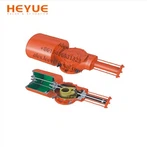
Both single-acting pneumatic actuators and double-acting pneumatic actuators are common pneumatic components, and their main difference lies in their different working methods.
The single-acting pneumatic actuator can only complete the work in one direction, that is, it can only perform the work in the forward direction, while the reverse work needs to be completed by external force. Inside the single-acting pneumatic actuator, the gas can only work with the inlet and outlet in one direction, so it only has one-way driving function. It is usually used on some simple actuators, such as switches, check valves, etc.
The double-acting pneumatic actuator can complete the work in two directions, that is, it can complete the forward work and the reverse work, and it has a two-way drive function. Inside the double-acting pneumatic actuator, gas can enter and discharge through different inlets and outlets to control the forward and reverse movement of the actuator. Double-acting pneumatic actuators are usually used in some more complex actuators, such as valves, pneumatic buried check valves, etc.
Both have their own advantages and application scenarios, and the selection needs to be comprehensively considered according to the actual situation. Regardless of the type of pneumatic actuators, they have a wide range of applications and can provide effective power support for various industrial automation systems, helping to improve work efficiency, reduce costs, and improve safety.