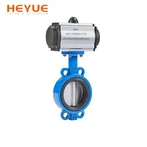
The pneumatic actuator has large thrust and stroke, is easy to install and fix, and has the following characteristics: easy to achieve forward/reverse action settings, long stroke, the bypass valve can be manually operated in the short term, the positioner is not affected by changes in air source pressure, and is anti-vibration. Fast response, three-break protection function, etc. So, what is the three-break protection function of pneumatic actuator?
1. Gas cut-off self-locking protection
Mainly achieved with the help of exhaust valve and locking valve. Adjust the operating pressure of the exhaust valve to a certain value. When the air pressure is higher than this value, the air pressure will be output normally. Open the locking valve so that the air paths from the slide valve to both ends of the cylinder are connected, so that it is in normal working condition. If the air pressure is lower than the set value, the exhaust valve is blocked, and then it is switched to the air path, and the air pressure is exhausted through the exhaust valve. At this time, the locking valve will block the air path, and the pneumatic actuator maintains its original position to achieve self-locking protection when the air is cut off.
2. Power failure protection
This is achieved through a solenoid valve. If the power supply voltage is normal, it will work normally. If the power supply disappears, the solenoid valve switches the air path, and the exhaust valve will evacuate the air pressure, and then switch the air path. The exhaust locking valve will put the locking valve in a locked state to maintain the load in its original position and achieve power-off protection.
3. Signal interruption protection
This is achieved by an electronic switch. When the signal current is greater than the lower limit current, it works normally. When the signal current is suddenly interrupted, the electronic switch is blocked and the solenoid valve loses power, realizing signal interruption protection.