


Hey there! As a supplier of Modulating Electric Actuators, I often get asked about the concept of hysteresis in these devices. So, let's dive right in and break down what hysteresis of a modulating electric actuator is all about.
First off, what's a modulating electric actuator? Well, it's a device that can control the position of a valve or other mechanical component in a continuous manner. It's different from On-Off Electric Actuators, which can only be in two states: fully open or fully closed. Modulating actuators can stop at any position between the two extremes, allowing for precise control of various processes.
Now, let's talk about hysteresis. In simple terms, hysteresis is the difference in the input-output relationship of a system depending on whether the input is increasing or decreasing. For a modulating electric actuator, it means that the position of the actuator might not be the same for the same control signal when the signal is rising compared to when it's falling.
Imagine you're using a modulating electric actuator to control the flow of water through a valve. You start increasing the control signal to open the valve more. As you do this, the actuator moves the valve to a certain position corresponding to that signal. Now, if you start decreasing the control signal to close the valve, you might find that the valve doesn't return to the exact same position it was at for the same signal value during the increasing phase. This difference in position for the same control - signal value during increasing and decreasing input is hysteresis.
There are a few factors that can cause hysteresis in a modulating electric actuator. One of the main culprits is friction. Inside the actuator, there are moving parts like gears, shafts, and bearings. When the actuator is moving in one direction, the friction between these parts can cause a certain amount of resistance. As the direction of movement changes, this friction can act differently, leading to a difference in the actuator's response.
Another factor is backlash. Backlash occurs in mechanical systems with gears. When the direction of rotation of the gears changes, there is a small amount of play or free movement before the gears start transmitting the force again. This can result in a delay or difference in the actuator's position for the same control signal.
The electrical components of the actuator can also contribute to hysteresis. For example, the motor's magnetic properties can cause a difference in its performance depending on whether it's accelerating or decelerating. The control electronics might also have some inherent delays or non - linearities that affect the actuator's response.
So, why does hysteresis matter? In many applications, precise control is crucial. For instance, in a chemical process where the flow rate of a reactant needs to be accurately regulated, hysteresis can lead to inaccuracies in the process. If the valve position is not consistent for the same control signal, it can result in variations in the amount of reactant flowing through, which can affect the quality of the final product.
In HVAC systems, hysteresis can impact the temperature regulation. If the modulating actuator controlling the air damper has significant hysteresis, it might not open or close the damper at the exact right time, leading to temperature fluctuations in the building.
As a supplier, we're well - aware of the importance of minimizing hysteresis in our products. We use high - quality materials for the mechanical parts to reduce friction. Our engineers design the gear systems with minimal backlash to ensure smooth and consistent operation. We also carefully select and calibrate the electrical components to minimize any non - linearities.
We offer a wide range of modulating electric actuators to suit different applications. For smaller - scale projects, our Mini Plastic Electric Actuator is a great choice. It's compact, lightweight, and still provides reliable performance with low hysteresis.
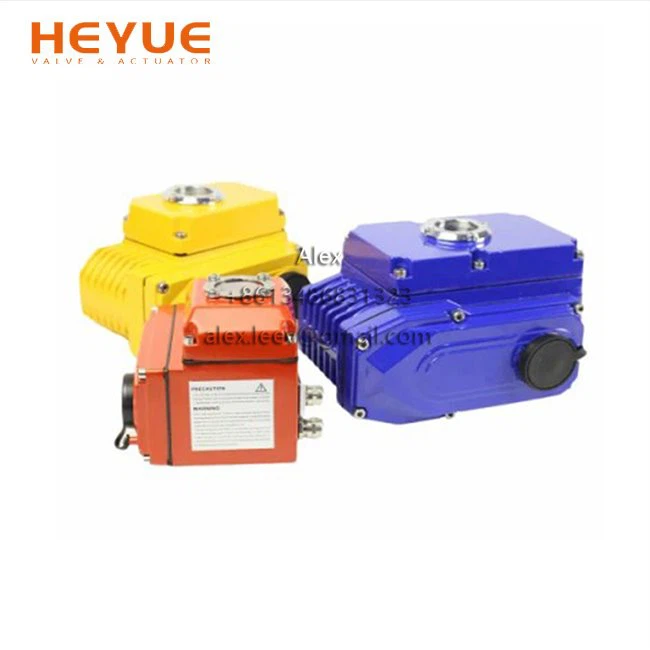

For applications that require more turns or a higher torque, our Multi Turn Electric Actuator is the way to go. It's designed to handle more demanding tasks while maintaining precise control and minimizing hysteresis.
If you're in the market for modulating electric actuators, you want a product that offers accurate and consistent performance. That's where we come in. Our team is dedicated to providing the best - in - class actuators with low hysteresis to meet your specific needs.
Whether you're working on a small DIY project or a large - scale industrial application, we can help you find the right modulating electric actuator. We understand that every project is unique, and we're here to offer personalized solutions.
If you're interested in learning more about our products or have any questions regarding hysteresis or other technical aspects, don't hesitate to get in touch. We're always happy to have a chat and discuss how our modulating electric actuators can fit into your project. Reach out to us, and let's start a conversation about your procurement needs. We look forward to working with you to ensure your project runs smoothly and efficiently.
References
- "Control Systems Engineering" by Norman S. Nise
- "Mechanical Engineering Design" by Joseph E. Shigley and Charles R. Mischke