

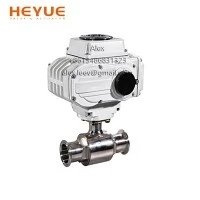


As a supplier of Multi Turn Electric Actuators, I often encounter questions from customers regarding the operational capabilities of these devices. One of the most common inquiries is whether a multi turn electric actuator can operate in reverse. In this blog post, I will delve into this topic, exploring the technical aspects, applications, and benefits of reverse operation in multi turn electric actuators.
Understanding Multi Turn Electric Actuators
Before we discuss reverse operation, it's essential to understand what multi turn electric actuators are. A Multi Turn Electric Actuator is a device that converts electrical energy into mechanical motion, typically used to control the opening and closing of valves or other multi - turn devices. These actuators are designed to make multiple revolutions, which is ideal for applications where a large number of turns are required to fully open or close a valve.
Can a Multi Turn Electric Actuator Operate in Reverse?
The short answer is yes, a multi turn electric actuator can operate in reverse. Most modern multi turn electric actuators are designed with the ability to rotate in both the clockwise and counter - clockwise directions. This bidirectional operation is achieved through the use of a reversible motor and a control system that can switch the direction of the motor's rotation.
The control system of a multi turn electric actuator is typically equipped with a reversing contactor or a solid - state relay. When a command is sent to reverse the direction of the actuator, the control system changes the electrical connections to the motor, causing it to rotate in the opposite direction. This allows the actuator to close a valve that was previously opened or vice versa.
Technical Considerations for Reverse Operation
When operating a multi turn electric actuator in reverse, several technical considerations need to be taken into account.
Torque and Power
The torque and power requirements for reverse operation are generally similar to those for forward operation. However, in some cases, the load characteristics may change when the actuator operates in reverse. For example, if the valve has a certain amount of friction or resistance in one direction, this may be different when the actuator reverses. Therefore, it's important to ensure that the actuator has sufficient torque and power to handle the load in both directions.
Limit Switches
Limit switches are an important safety feature in multi turn electric actuators. They are used to stop the actuator when it reaches the fully open or fully closed position. When operating in reverse, the limit switches need to be properly configured to ensure that the actuator stops at the correct positions. Incorrectly set limit switches can lead to over - travel, which can damage the actuator or the valve.
Encoder and Feedback
Many multi turn electric actuators are equipped with encoders or feedback devices that provide information about the position of the actuator. When operating in reverse, the encoder needs to accurately track the position of the actuator in the opposite direction. This ensures that the control system can accurately monitor and control the movement of the actuator.
Applications of Reverse Operation
Reverse operation of multi turn electric actuators has several important applications in various industries.
Valve Control
In the oil and gas, water treatment, and chemical industries, valves are used to control the flow of fluids. Multi turn electric actuators are commonly used to open and close these valves. The ability to operate in reverse allows for precise control of the valve position, which is crucial for maintaining the proper flow rate and pressure in the system.
Industrial Automation
In industrial automation systems, multi turn electric actuators are used to control various mechanical devices. Reverse operation enables these devices to perform complex tasks, such as moving a conveyor belt back and forth or adjusting the position of a robotic arm.
Benefits of Reverse Operation
Flexibility
The ability to operate in reverse provides greater flexibility in system design and operation. It allows for the use of a single actuator for multiple tasks, reducing the need for additional equipment.
Maintenance and Troubleshooting
Reverse operation can also be useful for maintenance and troubleshooting. For example, if a valve becomes stuck, reversing the actuator can sometimes free the valve and restore normal operation.
Comparison with Other Types of Actuators
It's interesting to compare the reverse operation capabilities of multi turn electric actuators with other types of actuators, such as Quarter Turn Electric Actuators and Modulating Electric Actuators.
Quarter turn electric actuators are designed to make a 90 - degree rotation, typically used for ball valves and butterfly valves. While they can also operate in reverse, their operation is more limited compared to multi turn electric actuators, as they only need to make a single quarter - turn.
Modulating electric actuators are used for precise control of valve position, often in applications where the flow rate needs to be continuously adjusted. These actuators can also operate in reverse, but their main function is to provide smooth and accurate modulation of the valve position.
Conclusion
In conclusion, a multi turn electric actuator can operate in reverse, and this capability provides significant benefits in terms of flexibility, control, and maintenance. Whether you are in the oil and gas industry, water treatment, or industrial automation, the ability to reverse the operation of a multi turn electric actuator can enhance the performance and reliability of your system.


If you are interested in learning more about our Multi Turn Electric Actuators or have any questions regarding their reverse operation capabilities, please feel free to contact us for a detailed discussion and potential procurement. Our team of experts is ready to assist you in finding the right solution for your specific needs.
References
- [1] Smith, J. (2020). "Principles of Electric Actuator Operation". Industrial Automation Journal.
- [2] Johnson, A. (2019). "Advances in Multi Turn Electric Actuator Technology". Mechanical Engineering Review.